Academics
ARU Education Model
Asked what our education model is, our generic answer is that it rests on the University's values, vision, mission and working premises. From that core grow the Rural Transformation Specialist, rural innovation and the Epicentre strategy.
How students learn
60%
Theory
40%
Practice
Classroom study is deliberately paired with sustained community fieldwork, so students practise what they learn with real households and epicentres.
The official model
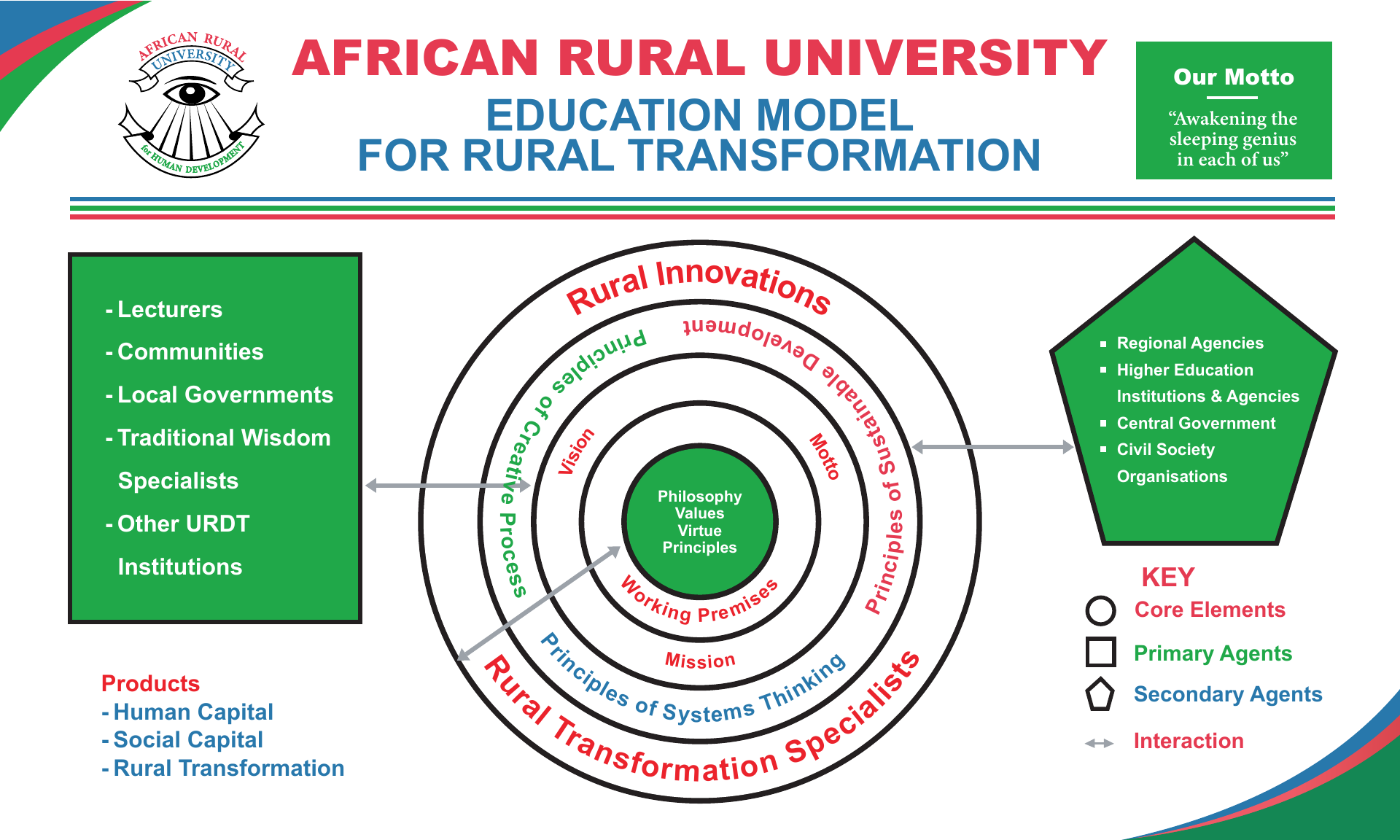
Education model for rural transformation
 Full size
The model from the inside out
Centre
philosophy, values, virtue and principles
Inner elements
working premises, vision, mission and motto
Surrounding principles
the creative process, systems thinking and sustainable development
Outer ring
rural innovations and Rural Transformation Specialists
Primary agents
lecturers, communities, local governments, Traditional Wisdom Specialists and other URDT institutions
Secondary agents
regional agencies, higher education institutions and agencies, central government and civil society organisations
Products
human capital, social capital and rural transformation
Learning by doing
60% theory, 40% practice
Classroom study is deliberately paired with sustained community fieldwork, so students practise what they learn with real households and epicentres.
- 01
Interdisciplinary: science, technology, engineering, mathematics and the social sciences together
- 02
The principles of creating is a mandatory foundation course for all learners and staff
- 03
Rural communities are the University's social laboratories, and their insights feed back into course design
- 04
Traditional Wisdom Specialists teach and co-research alongside seasoned academics
- 05
E-learning, women circles and participatory action research as learning methods
Our academic approach
The Foundation Course
Daily Learning Experience
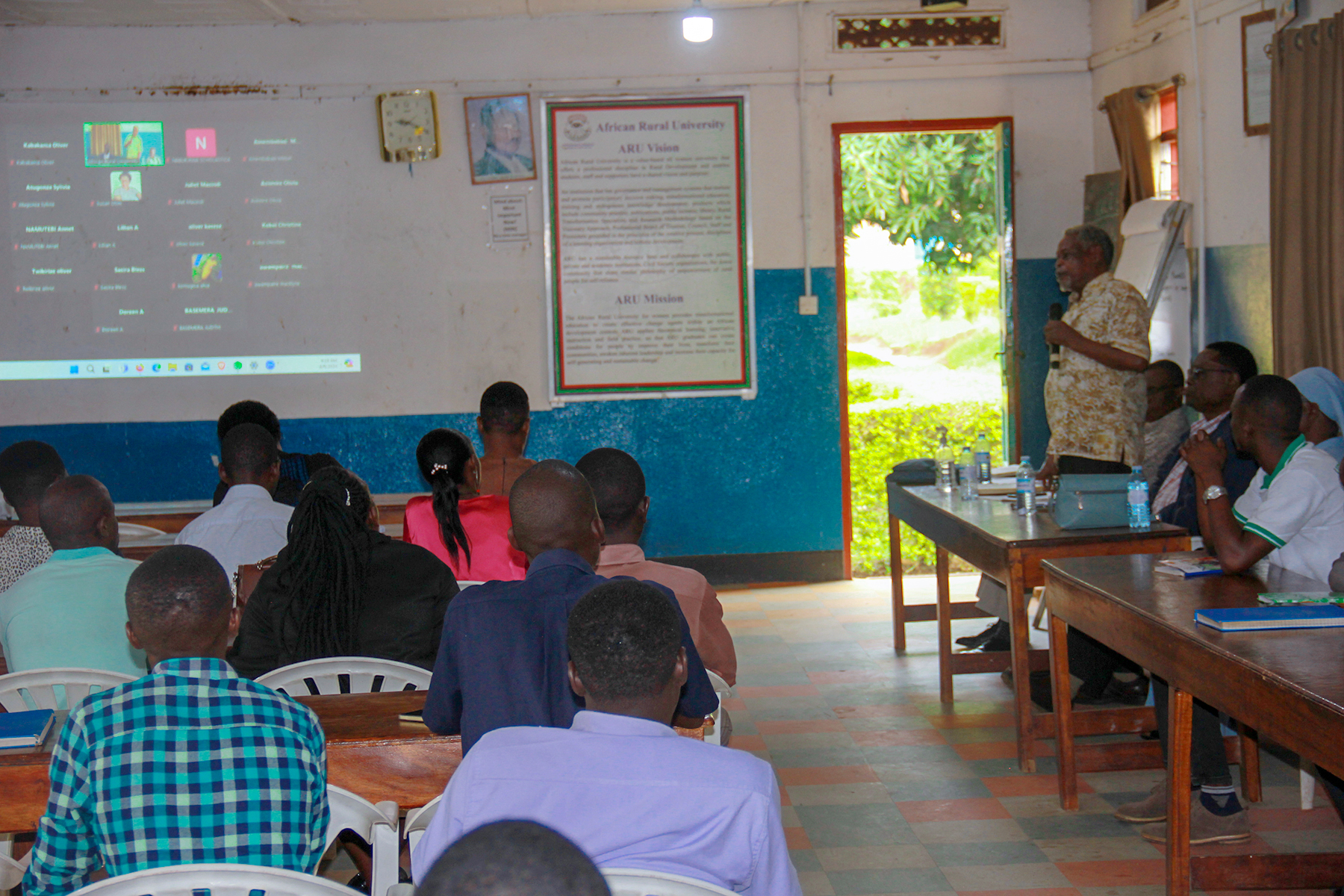
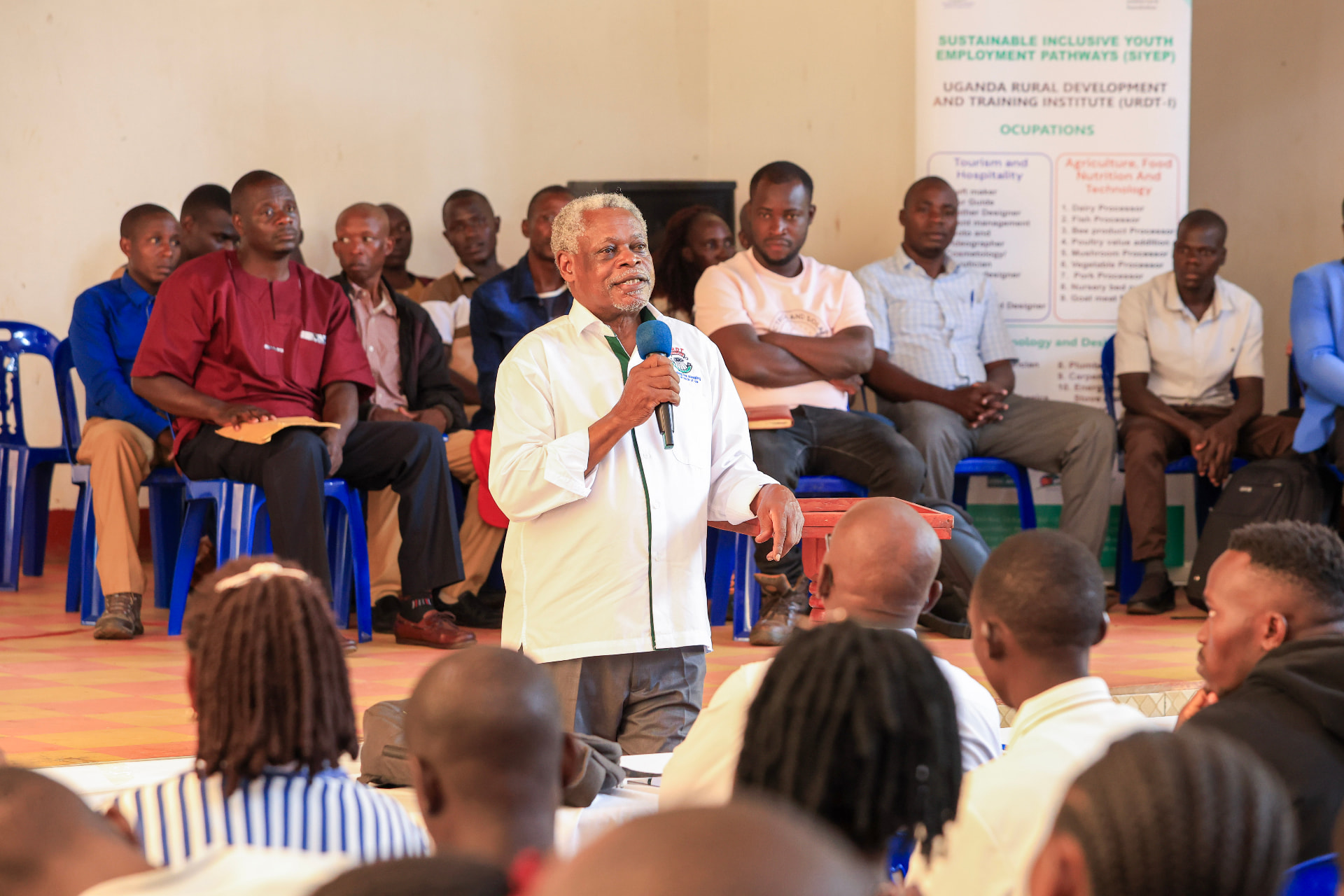
The Foundation Course is an ongoing, university-wide and community-inclusive learning platform. It brings people together each weekday to explore ideas, share experience and learn from one another.
This is a continuous learning experience, not simply a one-time orientation programme for new students.
Daily schedule
Monday to Friday
7:45 AM to 9:00 AM
Participants
Students, University staff, Community members, Invited resource persons.
One Learning Community. Diverse Perspectives. Shared Transformation.
Topics of Discussion
- Social issues and community development.
- Economic transformation and entrepreneurship.
- Political awareness, leadership and governance.
- Technology, digital transformation and innovation.
- Culture, indigenous knowledge and traditional wisdom.
- Environment and sustainable development.
Methodology
The Foundation Course uses participatory and experiential learning methodologies, including:
- Group dialogue and interactive discussions.
- Knowledge sharing and storytelling.
- Critical reflection and collective learning.
- Engagement with Traditional Wisdom Specialists.
- Guest presentations and expert conversations.
- Reflection through ARU's Visionary Approach.
Creating, not only solving
The Visionary Approach
Unlike conventional models focused on solving problems, the Visionary Approach enables communities and people to create what they truly want.
- 01
Vision
naming the result a person or community truly wants
- 02
Current reality
telling the truth about where things stand today
- 03
Structural tension
holding vision and reality together as the energy for creative action
Core competencies
The three masteries (3Ms)
Mastery of the principles of the creative process
Mastery of systems thinking
Mastery of sustainable development
Systems thinking in practice
Five pillars of sustainable rural development
Ecology
sustainable agriculture, renewable energy, transport, human settlements, nutrition-based agriculture and environmental ethics
Economics
ecological economics, care economies and other new economic models
Social justice
gender equality and equity, public medicine and health, education for social transformation, participatory action research
Culture
African philosophy, indigenous people, indigenous science and technology
Political
good governance, a human rights-based approach to planning, Africa and democracy, citizenship and civil participation
ARU Education Model
Our working premises
ARU uses the following five working premises that inform the ideology of the University.
The people of Africa, like the people world over, are key to their own development.
African development professionals teach and learn with members of communities, while the people remain the driving force in all the work that is planned and accomplished. The benefits are: because development professionals live and work with the villagers, monitoring and evaluation of progress are ongoing, flexibility exists to make any necessary adjustments quickly, and therefore, the likelihood of success is increased.
Lasting change occurs when people shift from reacting to events to being creators of their own circumstances.
The students, and through them the communities, are introduced to the principles of the creative process. Its key elements: vision, corresponding current reality, and the resultant structural tension. Together with the community, students generate result-oriented action plans using systems thinking. This creates self-generating development with the people both as objects and subjects of change.
Education, training and information sharing are key ingredients in the development process.
ARU partners with URDT (the owners): ’to have a cyclic, or in a more fundamental way, a spiral action of learning and experimentation with the communities as social laboratories, collective reflection, redesign of programmes or interventions and relearning’. Hence tools and platforms such as community radios, community barazas, community dialogues and stakeholder sessions shall be employed in addition to published works.
People have innate power, wisdom and authority, which they can tap, to transform the quality of their lives and that of their communities.
Students learning integrates traditional wisdom and indigenous knowledge. They tap into their inherent capacities and learn to shift from dependence to interdependence (ubuntu).
People who share a common vision can transcend traditional barriers and prejudices caused by tribal, religious, political and gender differences and work together to achieve that which is truly important to them all.
This helps people rise above simplicity, pettiness and harness collective energy around what they want to create.
Girls, families and communities
The 2-Generations approach
Learning connects a girl, her family and her community.
Through the URDT Schools' 2-Generations approach, girls become visionary leaders and change-makers in their homes and villages. Students and their parents put learning into practice together, connecting the education of a girl with the development of her household.
This school-based approach forms part of the education continuum connected to ARU. Model homes of URDT Girls School students host ARU students during practicum and internship, while parents mentor students as they practise creating, systems thinking and sustainable development.
The graduate
The Rural Transformation Specialist
An ARU graduate leaves with a distinctive set of competencies and attributes.
Visionary leadership
a shift from a problem-solving to a creative orientation
Systems thinking
grounded in the five pillars of sustainable development
Entrepreneurial skills
structural thinking, business planning, project management and marketing
Technical skills
community action planning, research, regenerative farming, nutrition, water and sanitation, savings and loans associations and appropriate rural technologies
A vocation for rural areas
structural thinking, academic and political leadership, and self-management
Become a Rural Transformation Specialist
Explore our programmes and start your application.