Participatory Action Research
Participatory Action Research treats rural communities as co-researchers who design, conduct and act on the enquiry.
01
Research with people, not just about people
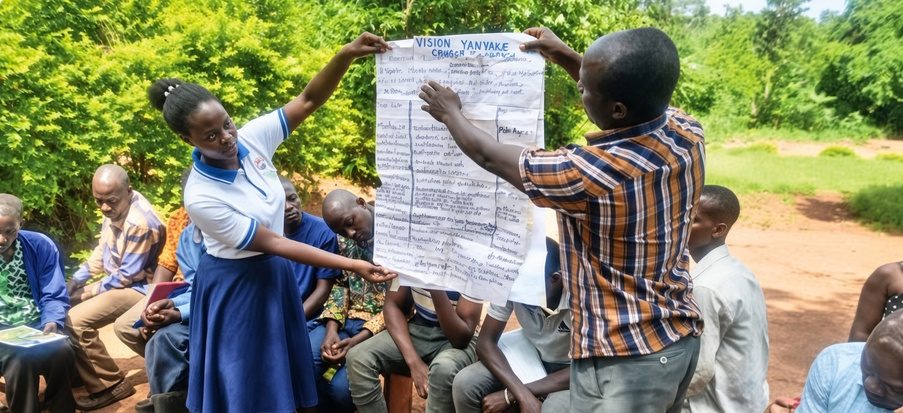
Community-Based Participatory Action Research (CBPAR) places communities at the centre of the research process, so that enquiry is connected to real aspirations, lived realities and practical opportunities for change.
In the first semester of their fourth year, students undertake CBPAR in consultation with their communities. Research concepts are developed with the host family or community, grounded in ARU's visionary and systems approach, and guided through the University's research structures.
Researchers involve community members and share findings in accessible, actionable forms. The result is research that listens, learns and responds.
02
Research priorities
- 01Agriculture
- 02Health
- 03Education
- 04Gender
- 05Social welfare
03
How it works
- 01Co-define the question with the community
- 02Gather evidence together as co-researchers
- 03Reflect on current reality honestly
- 04Act, review and adapt in a cycle, or, more fundamentally, a spiral
04
Communities as social laboratories
ARU partners with URDT in a spiral of learning and experimentation with communities as social laboratories: collective reflection, redesign of programmes and relearning.
Insights from participatory action research are fed back into course design and delivery, and used to advocate for systems change in the education sector and in national development policy.
05
Sharing findings
Findings travel through community radio, community barazas, community dialogues and stakeholder sessions as well as published works.
Ready to join ARU?
Applications open each April and close in August. The next window opens April 2027.